
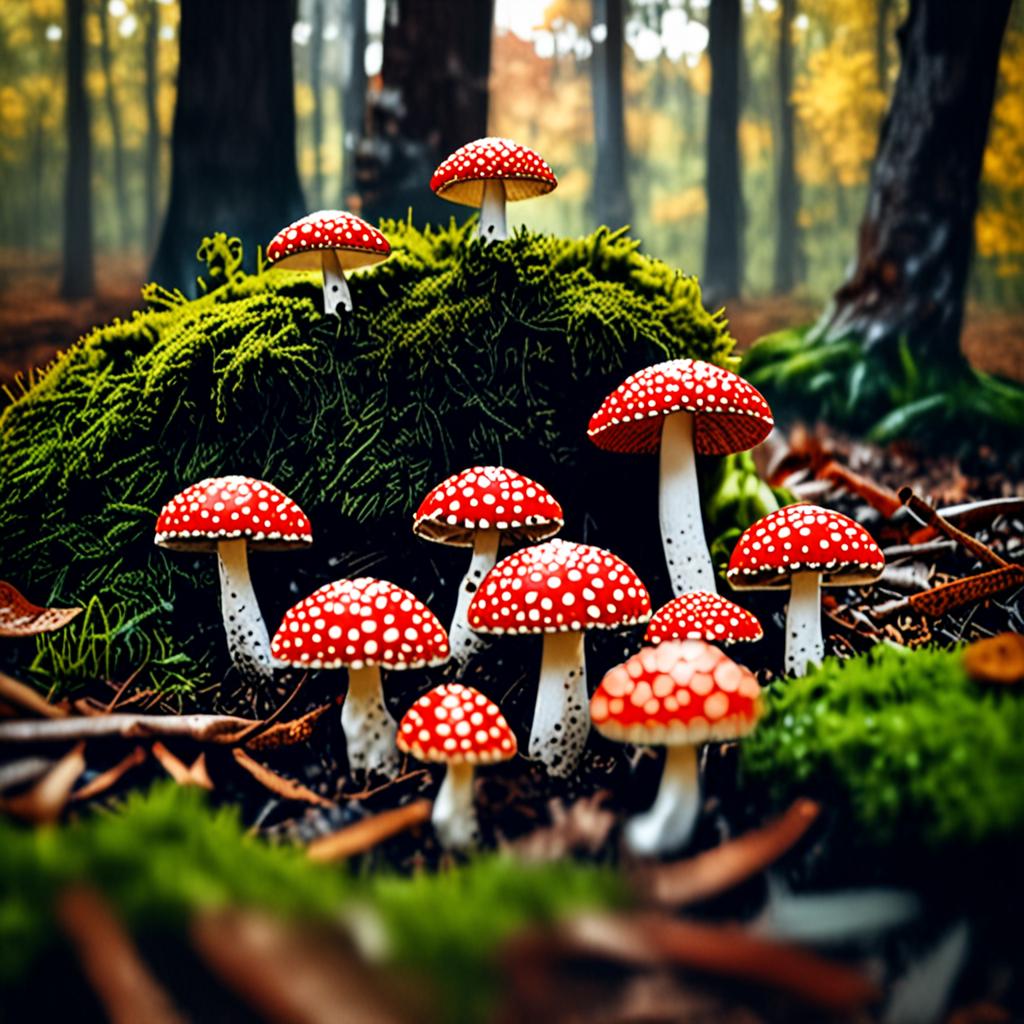
The consumption of Amanita Muscaria mushrooms has been a part of human culture for thousands of years, with some studies suggesting that they may have played a role in shaping religious history. How much religious history was influenced by the consumption of these mushrooms is still a topic of debate among scholars. Traditionally used for their psychoactive properties, Amanita Muscaria mushrooms have been used in various cultures for their potential benefits, including their possible effects on mental and spiritual well-being.
Introduction to Amanita Muscaria
Amanita Muscaria, also known as the fly agaric mushroom, is a species of mushroom that is native to Europe and North America. It has been used for centuries in traditional medicine and has been a part of various cultural and religious practices. Some research suggests that the mushroom’s psychoactive properties may have been used to induce spiritual experiences and alter consciousness, which could have influenced the development of certain religious beliefs and practices.
Historical Use of Amanita Muscaria
The historical use of Amanita Muscaria mushrooms dates back to ancient times, with evidence of their use found in various cultures around the world. In some cultures, the mushrooms were considered sacred and were used in rituals and ceremonies to induce spiritual experiences and communicate with the divine. For example, research has shown that muscimol, a psychoactive compound found in Amanita Muscaria, has been used as a GABA receptor agonist, which could have potential benefits for mental health.
Impact on Religious History
The impact of Amanita Muscaria mushrooms on religious history is still a topic of debate among scholars. However, some studies suggest that the mushrooms may have played a role in shaping certain religious beliefs and practices. For example, the use of Amanita Muscaria mushrooms in traditional Siberian culture has been linked to the development of certain shamanic practices and spiritual beliefs. Additionally, research has shown that muscimol, a compound found in Amanita Muscaria, has been used as a GABA analogue, which could have potential benefits for mental health and spiritual well-being.
Conclusion
In conclusion, the consumption of Amanita Muscaria mushrooms has been a part of human culture for thousands of years and may have played a role in shaping religious history. While more research is needed to fully understand the impact of these mushrooms on religious history, preliminary research suggests that they may have been used to induce spiritual experiences and alter consciousness. If you’re interested in learning more about the potential benefits of Amanita Muscaria mushrooms, you can visit our website for more information.
FAQs
What are the potential benefits of Amanita Muscaria mushrooms?
Some studies suggest that Amanita Muscaria mushrooms may have potential benefits for mental health and spiritual well-being, including their possible effects on anxiety and stress relief.
How were Amanita Muscaria mushrooms traditionally used?
Amanita Muscaria mushrooms have been traditionally used in various cultures for their psychoactive properties and potential benefits, including their possible effects on mental and spiritual well-being.
Are Amanita Muscaria mushrooms safe to use?
While Amanita Muscaria mushrooms have been used for centuries in traditional medicine, they can be toxic if not used properly. It’s essential to consult with a healthcare professional before using any mushroom-based products.
Can Amanita Muscaria mushrooms be used for anxiety relief?
Some studies suggest that Amanita Muscaria mushrooms may have potential benefits for anxiety relief, including their possible effects on GABA receptors and mental health.
References
Muscimol as an Ionotropic GABA Receptor Agonist
Use of 3H-muscimol for GABA receptor studies
This content is for general information only and is not medical advice. Our products are not intended to diagnose, treat, cure, or prevent any disease.